A badge scanned on Friday is a dead lead by Monday.
Paper cards get lost, follow-ups depend on memory, and nobody knows which rep brought what back from a three-day show. This is the capture playbook that fixes it — badges, voice, WhatsApp and offline, all landing in your CRM in seconds.
Kriti Kapoor · Trade shows & field sales · 9 min read
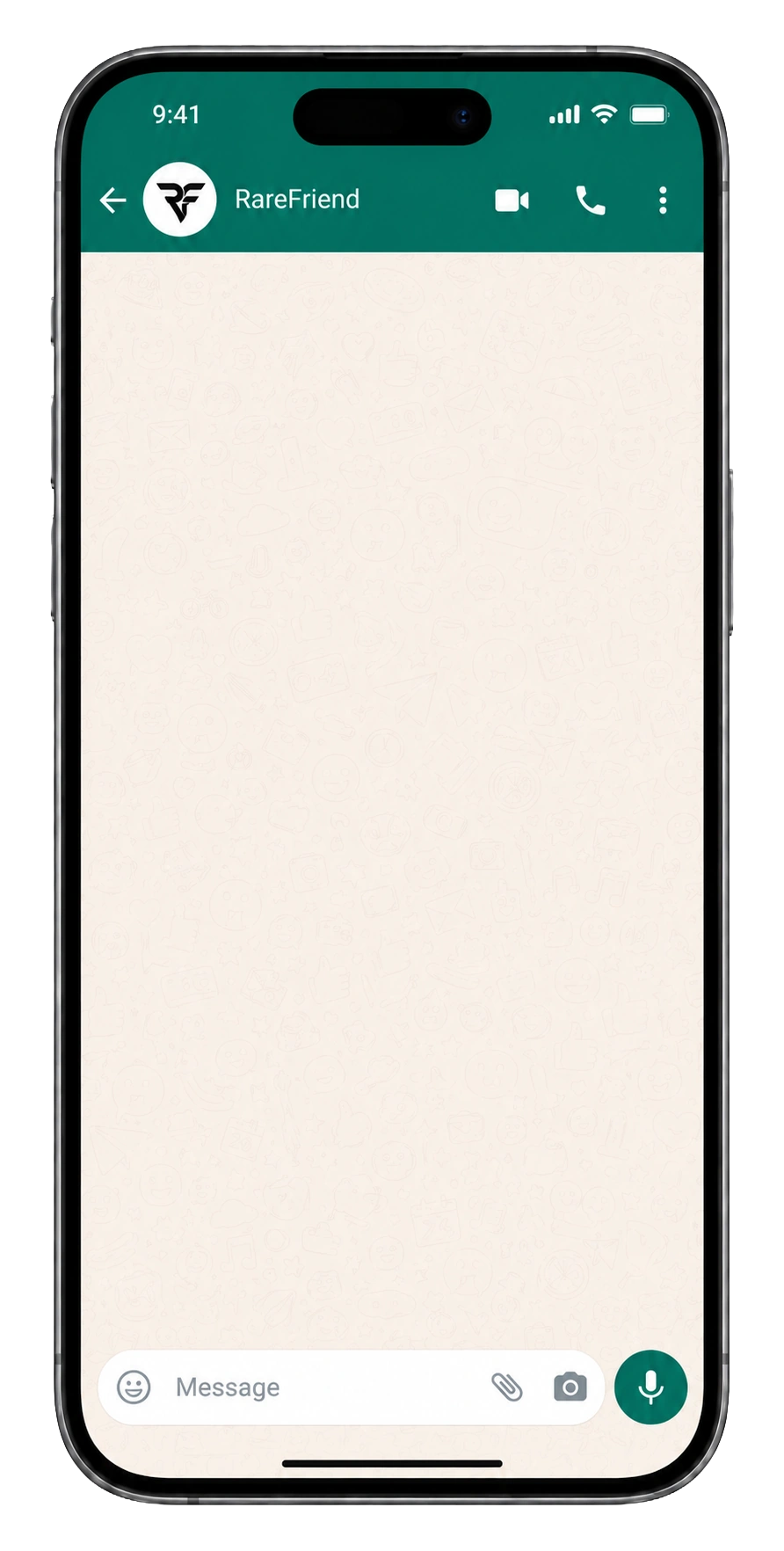
Scan, enrich, approve, sync — the capture thread, from the rep's phone.
The lead-leak funnel
Direct answer: an event pipeline leaks in three places — cards that never get typed up, records with no owner, and follow-ups that depend on memory. Fix all three and the same booth stops losing leads between the handshake and the CRM.
The first problem is that most teams cannot see the leak at all. According to EXHIBITOR magazine’s Sales Lead Survey (2015), only 35 percent of exhibitors measured and reported the percentage of trade-show leads that ultimately resulted in a sale — up from 28 percent in 2010. If you cannot count how many badges became pipeline, you cannot count how many leaked. (New to the topic? Start with what event lead capture is and the methods Indian field sales teams use, then come back for the booth playbook.)
The second is speed. In an audit of 2,241 US companies, 23% never responded to an inbound web lead at all, and those that did within 30 days took 42 hours on average. In a separate study of 1.25 million leads, firms that tried to make contact within an hour were nearly seven times as likely to qualify the lead as firms that waited even an hour longer, according to Harvard Business Review (2011). Those were web leads, not booth leads, but the mechanism is the same: a lead that waits in a tote bag over the weekend is a lead that has gone cold.
Where 100 badges go on a paper-first team
An illustrative 100-badge booth — a worked example of the three leaks, not survey data.
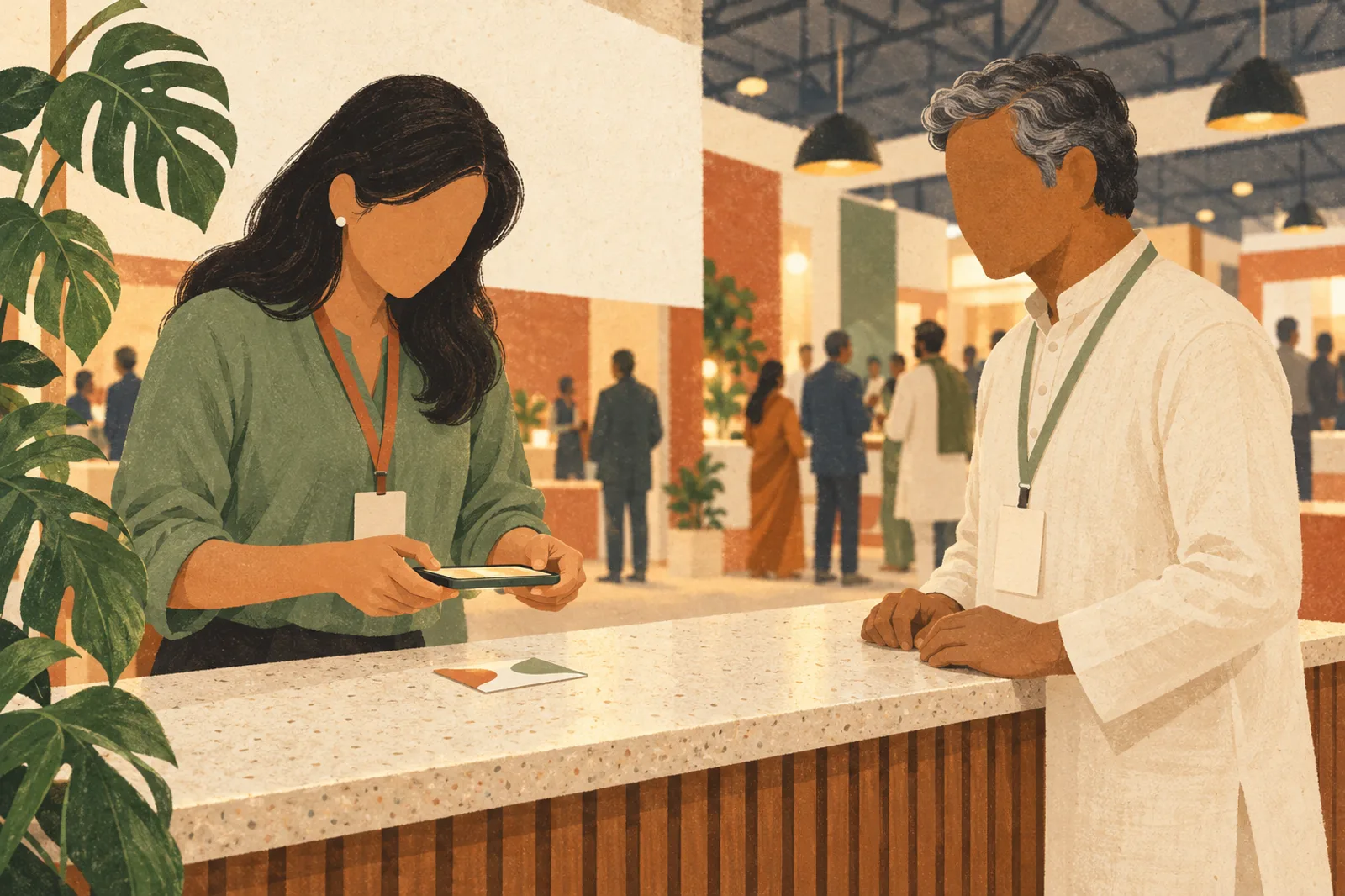
Four capture methods, one record
Direct answer: reps won't open an app between meetings. Give them four two-second paths that all land as the same enriched, attributed record.
Badges, paper cards, QR. Contact fields, event tag, rep owner and timestamp attach on their own.
Dictate what mattered two seconds after the handshake. It becomes a note on the contact; the recording itself is never stored.
For walk-ups without a badge. Works from a link with no install, on a locked phone.
Text the lead straight into WhatsApp. Approvals arrive later as WhatsApp buttons — no training, no new software.
Offline is the floor, not the fallback
Direct answer: expo halls have the worst connectivity on earth. Capture is a WhatsApp message, so WhatsApp's own outbox holds it and sends it when signal returns — no second app, no separate queue to babysit.
Tote bag → spreadsheet
Friday: 60 cards in a bag. Monday: 34 typed up. Wednesday: 12 followed up. Nobody knows who met whom.
Outbox → sent → approved
Friday: 60 card photos sent into WhatsApp, waiting in the outbox. Lobby Wi-Fi: every one sent, read and attributed on arrival. Monday: approved leads already in the CRM, leaderboard settled.
Attribution: if they weren't there, it's not theirs
Direct answer: enforce strict event rosters in the event's own time zone. Only people on the roster, captured during event hours, count. No match means unattributed — never guessed, never inferred.
This is what turns “events feel useful” into a number a CFO accepts: pipeline per event, cost per lead, a per-rep leaderboard a manager can use. Card apps sync contacts; they don't settle credit.
How the tools compare
Direct answer: Blinq, HiHello and Popl all do cards and badge capture well. RareMachine is the one built around the approval gate, WhatsApp, voice, strict event attribution and Frappe/Zoho CRMs.
| Capability | RareMachine | Blinq | HiHello | Popl |
|---|---|---|---|---|
| Digital cards + QR/NFC | QR only | Yes | Yes | Yes |
| Badge / card scanning | Yes | Yes | Yes | Yes |
| Offline-first capture | Yes, via WhatsApp’s outbox | Partial | Partial | Partial |
| WhatsApp intake + approvals | Yes | No | No | No |
| Voice notes to CRM, audio deleted | Yes | AI notetaker | No | No |
| CRM writes wait for approval | Yes | No | No | No |
| Strict roster + time-zone attribution | Yes | Pipeline tracking | Attribution views | ROI dashboard |
| Frappe + Zoho CRM native | Yes | No | No | No |
Digital cards + QR/NFC
Badge / card scanning
Offline-first capture
WhatsApp intake + approvals
Voice notes to CRM, audio deleted
CRM writes wait for approval
Strict roster + time-zone attribution
Frappe + Zoho CRM native
Stale comparisons damage credibility — this table is on a quarterly verify rota.
The booth checklist
Direct answer: settle six things before doors open — brand, roster, drill, tags, approvals and the Monday metric. Each one is a decision the show floor no longer has to make.
- Brand locked once by the admin — reps fill only their half, in seconds.
- Roster set before doors open, in the event’s time zone.
- One capture drill per rep: scan, speak, done — under fifteen seconds.
- Shared vs personal tags explained once; personal can never reach the CRM.
- Sync settled once: who approves, and whether an admin turns on auto-sync.
- Monday metric agreed in advance: pipeline per event, cost per lead.
Bring every handshake home.
Badge the team in an afternoon. Capture everything they meet. Approve what reaches your CRM.
Questions, answered
How do you capture leads at a trade show without internet?
Capture in WhatsApp: a card photo, a typed note or a voice note is a WhatsApp message, so WhatsApp holds it in its outbox and sends it when signal returns. RareMachine processes and attributes it on arrival, and nothing reaches the CRM until it is approved.
What is event lead attribution?
Tying every lead to the exact reps on the roster, during event hours, in the event’s time zone. No match means unattributed — never guessed, never inferred.
How does RareMachine compare to Blinq, HiHello and Popl?
All four handle cards and badge capture. RareMachine adds WhatsApp intake, voice-to-CRM with audio deletion, a human approval gate, strict event attribution, and native Frappe/Zoho support.